
Mathrushree Nethralaya
Typically replies instantly
Typically replies instantly

The Oculoplasty and Orbit Service focuses on functional and therapeutic disorders of the eyelids, orbit, and lacrimal drainage system. It also provides cosmetic enhancement procedures for eyelids, brow and forehead.
The centre has excellent surgical theatre which is fitted with an advanced operating microscope, surgical light, surgical loupes, and Radio frequency cutting-coagulating system. It is a unique specialty that relies on a surgeon's technical, artistic skill and ability. Dr. Venkatesh L K is highly qualified & trained at All India Institute of Medical Sciences, New Delhi, to perform aesthetic and reconstructive procedures in and around the delicate eye structures.
Any condition that affects the eyelid is called eyelid disorder. The most common eyelid disorders, their causes, symptoms and treatments are the following:
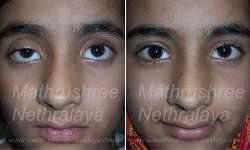
Ptosis (drooping eyelid) is when the upper eyelid droops or sags due to weakness or paralysis of the levator muscle (responsible for raising the eyelid), or due to damage to nerves controlling the muscle. It can be a manifestation of the normal aging process, a congenital condition or due to an injury or disease. Risk factors related to ptosis include diabetes, stroke, Horner syndrome, myasthenia gravis, brain tumor or other cancers that can affect nerve or muscle function.
Entropion is inward turning of the lid margin, toward globe and mostly affects the lower lid. It usually results from aging, but sometimes can be due to a congenital defect, a spastic eyelid muscle, or a scar on the inside of the lid that could be from surgery, injury, or disease. It is an asymptomatic condition that can rarely lead to trichiasis which requires surgery.
Ectropion is an outward turning of the lid margin, away from globe and mostly affects the lower lid. It is another aging-related eyelid condition that causes chronic eye irritation and scarring. It may also be the result of allergies and its main symptoms are excessive tearing and hardening of the eyelid conjunctiva.
Blepharochalasis : Chronic bouts of eyelid edema leads to blepharochalasis Eyelid edema is a condition in which the eyelids are swollen and contain excessive fluid. It may be serious when it increases the intraocular pressure. Eyelid edema is caused by an allergic reaction that one has to food, drugs, plan allergens, trichinosis or infections. The main symptoms are swollen red eyelids, pain, and itching. Treatment may vary depending on what is causing the condition. Whereas infections are fought against with antibiotics, allergic edemas treatments consists in staying away from the allergen.
Eyelid tumors Basal cell carcinomas are the most frequently encountered kind of cancer affecting the eyelid, making up 85% to 95% of all malignant eyelid tumors. The tumors may be benign or malignant. Usually benign tumors are localized and removed before becoming a cancerous threat and before they become large enough to impair one's vision. Malignant tumors on the other hand tend to spread to surrounding areas and tissues.
Blepharospasm is an involuntary spasm of the eyelid muscle. The most common factors that make the muscle in the eyelid twitch are fatigue, stress, and caffeine. Eyelid twitching is not considered a harmful condition and therefore there is no treatment available. Patients are however advised to get more sleep and drink less caffeine. Essential blepharospasm and hemifacial spasm usually affects older age group. Botox injection is commonly used to control the symptoms.
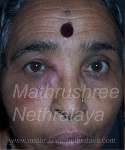
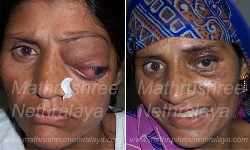
The orbit refers to the bony cavity in the skull that houses the eye and surrounding structures. Diseases of the orbit can arise from within the orbit or as part of a systemic illness that affects multiple tissues or organs. Some signs of orbital disorders include: Protrusion of the eyeball, pain, diplopia or double vision, loss of vision, redness and swelling of the eyelids
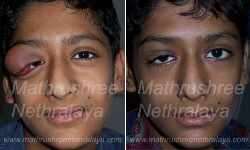
Orbital tumours can be benign or malignant. They can occur in both children and adults.
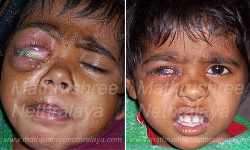
Orbital inflammatory disorders include infectious and non-infectious (orbital pseudotumor)
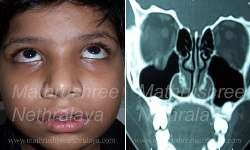
Blowout fracture: Commonly it is referred for fracture of the floor of the orbit
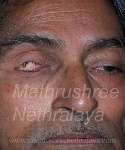
At our centre, we perform all forms of socket related surgeries like reconstruction of contracted orbital socket, primary and secondary orbital implants, dermis fat graft etc. For any queries please call to know more.
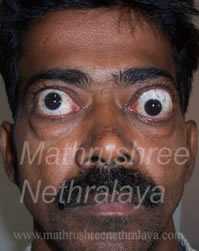
Thyroid-associated ophthalmopathy (TAO) (Graves' orbitopathy) is an autoimmune inflammatory disorder affecting the orbit around the eye, characterized by upper eyelid retraction, swelling (edema), redness (erythema), conjunctivitis, and bulging eyes (proptosis).It is part of a systemic process with variable expression in the eyes, thyroid, and skin, caused by autoantibodies that bind to tissues in those organs, and, in general, occurs with hyperthyroidism. The most common form of hyperthyroidism is Graves' disease. About 10% of cases do not have Graves' disease, but do have autoantibodies. The autoantibodies target the fibroblasts in the eye muscles, and those fibroblasts can differentiate into fat cells (adipocytes). Fat cells and muscles expand and become inflamed. Veins become compressed, and are unable to drain fluid, causing edema.
Botox Cosmetic is a prescription medicine injected into specific muscles to block nerve impulses in the treated area. Botox Cosmetic is produced from Clostridium botulinum bacterium, which is a natural, purified protein that attaches to nerve endings. This process blocks the neurotransmitter signals that trigger muscle contractions that cause fine lines and wrinkles giving a relaxed, more youthful appearance. Botox injection is also used to control symptoms of Essential blepharospasm and Hemifacial spasm.
