
Mathrushree Nethralaya
Typically replies instantly
Typically replies instantly

Cataract means cloudy areas in the lens inside the eye - which is normally clear. Cataract can develop in one or both eyes. If they develop in both eyes, one will be more severely affected than the other. A normally clear lens allows light to pass through to the back of the eye, so that the patient can see well-defined images. If a part of the lens becomes opaque light does not pass through easily and the patient's vision becomes blurry - like looking through cloudy water or a fogged-up window. The more opaque (cloudier) the lens becomes, the worse the person's vision will be.
A patient with cataracts will eventually find it hard to read, or drive a car - especially during the night. Even seeing people's facial expressions becomes difficult. Cataracts are not usually painful. The patient's long-distance vision is more severely affected at first.
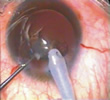
Phacoemulsification surgery
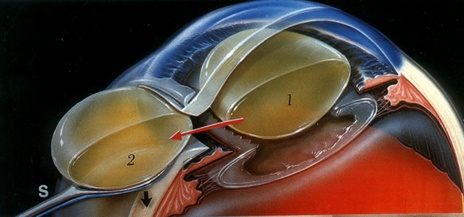
Manual cataract surgery
If the patient is found to be only mildly affected surgical treatment may not be needed. During its early stages, stronger glasses and brighter lights may help improve vision. The cloudy lens is removed from the eye and an artificial clear plastic one is put in its place - an intraocular implant (intraocular lens). At our centre we perform cataract operations without any injection, no bandage, no stitch, day care surgery. Cataract operations are performed as keyhole surgery. The surgery will be done under topical anesthesia. The operation is commonly known as phacoemulsification or phaco extracapsular extraction. Laser surgery is not used for cataract procedures.
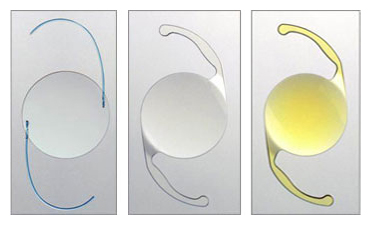
3-piece IOL, Single piece IOL, Blue filter IOL
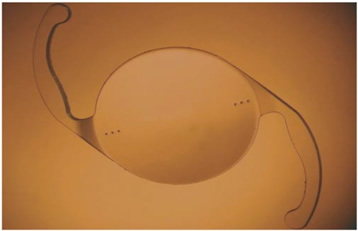
Toric IOL
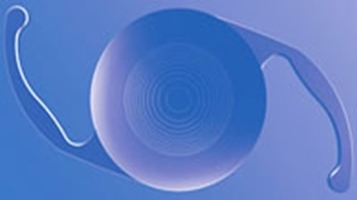
Multifocal IOL
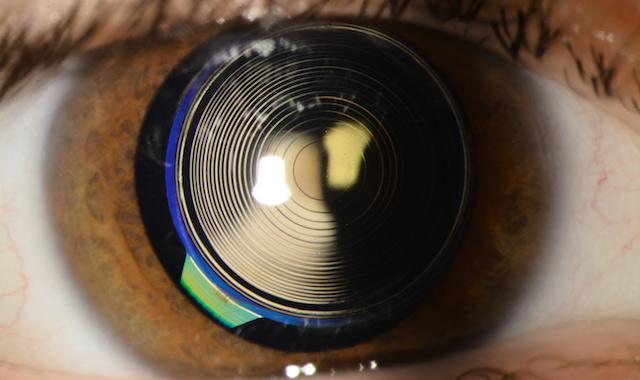
Multifocal IOL
Various types of replacement lenses may be used depending on the patient’s eye condition and visual needs.
Best Recommended IOL: Hydrophobic monofocal IOL with aspheric design and 360° square edge.
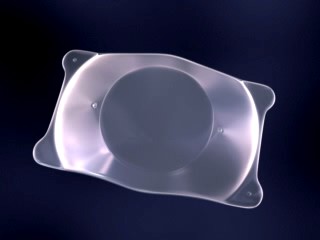
Implantable Collamer Lens
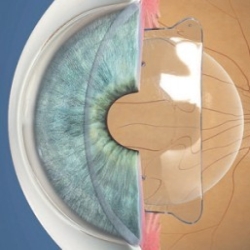
Implantable Collamer Lens
Implantable Collamer Lens (ICL), also known as Visian ICL, is a soft and flexible gel lens used for permanent correction of myopia (nearsightedness). It is made from a collagen copolymer material.
The ICL procedure is a type of refractive surgery in which the lens is implanted inside the eye and remains permanently. It does not require corneal tissue removal and often provides better visual outcomes compared to LASIK or PRK.
After implantation, the lens functions similarly to contact lenses and usually provides long-term freedom from glasses or contact lenses.
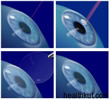
LASIK Surgery for Spectacle Removal
LASIK (Laser-Assisted in Situ Keratomileusis) is a popular refractive surgery used to correct myopia, hyperopia, and astigmatism. The procedure reshapes the cornea using a laser to improve visual clarity.
For most patients, LASIK provides a permanent alternative to eyeglasses or contact lenses. It is one of the most advanced and widely performed eye surgeries.
Possible side effects may include temporary dryness, glare, halos, or night-driving difficulties. Patients with thin corneas or high myopia may consider alternatives like ICL.
